Over the last three weeks I’ve been lucky enough to enjoy several epochal cultural phenomena, and always eager to share that which has knocked my socks off, I submit to you all the following can’t miss works of art:
Extremely Loud and Incredibly Close, Jonathan Safran Foer: To say this book blew my mind is an understatement, for it altered every idea I had about what a novel is, was, and could hope to be. To be honest, when I picked it up and read the synopsis I was skeptical at best. I have little tolerance for exploitation and I saw the plot, a young boy dealing with his father’s death in the World Trade Center, as exploitative schlock at its worst. But I’ve never read a book that dealt so poignantly with grief, human connection and self-knowledge. The book is everything at once: a wild adventure, a love story, a pacifist tome, a reflection on memory, a historical fiction, a comedy, a tragedy, etc. etc.
But in the end it’s the simple story of a boy seeking understanding, and it’s phenomenal. In a way, it’s depressing that the best possible novel has already been written. But you should read it anyway.
Henderson the Rain King, Saul Bellow: This book takes us into the heart of undiscovered Africa with Eugene Henderson, a middle-aged patriarch and wealthy heir seeking to burst his spirit’s sleep and quell the internal voice that screams I want I want I want. This book explores self-consciousness and happiness (or more specifically contentment). Is it enough to just get by, to live life and ask for nothing more, or by doing so are we suppressing our call for something better? This theme particularly resonated with me, and I suspect it will with some of you as well.
Ragtime, E. L. Doctorow: If you have even a minor interest in American History this book is worth checking out. Seamlessly weaving real historical figures (Houdini, J.P Morgan, Henry Ford, Emma Goldman) and fictional characters in early 1900’s New York, Ragtime is one of the more engaging narratives I’ve read.
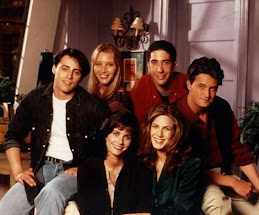
Big Bang Theory: This CBS sitcom is fairly formulaic in the 30-minute laugher tradition, but in my opinion does it better than any other show on TV right now (The Office seems to have lost its bearings). It’ll never live up to Seinfeld or Arrested Development standards (and it follows more of a linear story line…think Friends), but in the huge pile of sitcom shit it definitely rises to the top. It has likeable characters, a funny premise and every word out of Sheldon’s mouth is comedic gold.
Viva la Vida, Coldplay: The progression of Coldplay’s career has been an interesting one for me. The first major release, Parachutes, was simple, sincere, not quite gritty but far from produced. Just four great musicians with serious melodic intuitions playing great songs. Guitars, piano and drums. No fanfare. No expectation. It was also the source of a few songs that remain my favorites to this day.
Then came A Rush of Blood to the Head, their sophomore effort that produced major pop hits, including Clocks and The Scientist, making Coldplay bonafide superstars and the heir apparent to U2. They turned political, donning the equality sign to show their support for Fair Trade. Lead singer Christopher Martin married Gwenyth Paltrow. They became rock stars, and celebrities.
In X&Y this newfound rock star status, and their efforts to meet expectations, showed a bit. Every song felt like an epic. The organ became a featured instrument. They sounded like they were trying to bear the weight of the world and right every injustice with each lyric. The music was still amazing, the melodies still spot on, but it was exhausting (and Chris Martin was starting to sound like more and more of a sissy with the falsetto. Don’t get me wrong, he’s got a good falsetto, but a little goes a long way).
Viva la Vida says f*%$ that. We’re four damned good musicians and this album’s for us. And by the way, you’re gonna like it. And I do. Sometimes it’s funky (Lovers in Japan), sometimes it’s bluesy (Cemeteries in London), sometimes it can only be described as twangy orchestral (Yes). At least one song ought to feature Ludacris (Lost), and the single Violet Hill is arguably Coldplay’s first true rocker (or close enough).
Thanks for reading.
P.S. Mr. A, thanks for the link in the last comments section. James Dobson is a douche and a fraud. Maybe I’ll bring back People of Note in his honor.
Showing posts with label Reviews. Show all posts
Showing posts with label Reviews. Show all posts
Wednesday, June 25, 2008


Wednesday, December 26, 2007
Worth a Look
I pray everyone had an enjoyable and relaxing Christmas break. I imagine a number of you, like me, are back at work for the next three days (the un-productivity of which may well set new standards for lost hours). If that is the case, my condolences.
Who else remembers the days when we would have nearly a month off for Christmas? At my former job we did a good deal of business with Ireland (our sister plant was in Galway) and the workflow came close to a complete standstill from December 1 to January 3. The corporate world takes the whole month off over there. I originally suspected this phenomenon was limited to the tiny, drunken island. But recently, while waiting for a flight out of LAX, I met a woman from Australia who was traveling for a month because Australia doesn’t work during the holidays either.
In other words, we’re getting screwed.
On a brighter note, I took advantage of the weekend to catch a couple of flicks I’d been wanting to see and I’ll give both glowing endorsements.
The first was Charlie Wilson’s War, the story of the rogue congressman (Tom Hanks) who, at the prodding of a wealthy socialite (Julia Roberts), managed to secure the funding that enabled the Afghan mujahideen to defeat the Soviet occupation during the ‘80s.
The film offers a fascinating look at history that has for the most part flown under the radar. I knew very little about Charlie Wilson going in (and why would I? He was a nobody politician from Texas), but now see that, despite his faults (womanizing, drinking, drug using…maybe), his impact on the last 25 years of American history are arguably unparalleled. Consider that he was solely responsible for arming and training the men who would become Al Qaeda. And that to a certain extent he saw it coming (I’d say more, but I don’t want to spoil anything).
The performances in Charlie Wilson’s War are, as I’d expect, nothing short of genius. Hanks as the charming and mischievous Charlie Wilson is what can only be described as typical Tom Hanks. This sounds like a knock on his performance; like he phoned it in. Not so. I mean to say it is the Tom Hanks we know and love (the Oscar winning extraordinaire) and that he is hands down (I won’t listen to argument) the best actor ever (dead or living).
Though Julia Roberts as the glamorous (if a bit self-righteous) debutante and Philip Seymour Hoffman as the volatile, underestimated CIA agent are more than capable of holding their own.
The second film I saw was Sweeney Todd: The Demon Barber of Fleet Street. Keeping with Tim Burton/Johnny Depp fashion, this offering is dark, creepy and obsessed with curiosities at the fringe of society.
With Burton, it’s sometimes difficult knowing what to expect. At his best (in my opinion Big Fish), he creates peculiar tales filled with characters longing to belong. At his worst (Planet of the Apes), he creates films where plot takes a back seat to spectacle. It’s impossible to deny his ability as a visual filmmaker, or the unique style that he has created and may as well copyright, but to say he can be inconsistent is somewhat of an understatement.
With this adaptation of the Broadway musical, Burton is at his absolute best. Every scene is a visual masterpiece, stunning in both artistic composition and brooding emotion. The London he creates is terrifying in its shadows, merciless in its squalor, and splendid in all its filth.
Johnny Depp as the vengefully murderous barber is seething in his wrath; his obsession with revenge permeates every word, every glance. He is not a natural Broadway singer, but that suits this role just fine. His rock tenor boils over with anger, making his hatred palpable. Helena Bonham Carter (Burton’s wife, and also not a natural singer) embodies the role of the lonely, desperate pie maker with a spot on slumming accent and a visible longing in her eyes.
Perhaps most impressive, Burton manages to make this musical subdued, intimate. I usually find that musicals adapted for the screen are overdone and silly. Grandiosity is fine on stage because the audience is further removed from the action. But in film we are invited to wander amongst the characters. It can be disarming if they inexplicably break out into song. Not so in Sweeney Todd. By avoiding any chorus line sing-along type scenes, Burton focuses on the story and the development of emotional tension. He ends up with a taut, character driven film in which the style beautifully serves, but never overwhelms, the flow of the story.
As a disclaimer, Sweeney Todd is almost overwhelmingly bloody. Burton has washed most of the color out of the film, rendering it nearly black and white. Yet the blood is a vibrant, startling red. When Mr. Todd takes his first victim, and the screen is filled with ruby, viscous liquid, be warned: you may be disturbed.
Thanks for reading.
Who else remembers the days when we would have nearly a month off for Christmas? At my former job we did a good deal of business with Ireland (our sister plant was in Galway) and the workflow came close to a complete standstill from December 1 to January 3. The corporate world takes the whole month off over there. I originally suspected this phenomenon was limited to the tiny, drunken island. But recently, while waiting for a flight out of LAX, I met a woman from Australia who was traveling for a month because Australia doesn’t work during the holidays either.
In other words, we’re getting screwed.
On a brighter note, I took advantage of the weekend to catch a couple of flicks I’d been wanting to see and I’ll give both glowing endorsements.
The first was Charlie Wilson’s War, the story of the rogue congressman (Tom Hanks) who, at the prodding of a wealthy socialite (Julia Roberts), managed to secure the funding that enabled the Afghan mujahideen to defeat the Soviet occupation during the ‘80s.
The film offers a fascinating look at history that has for the most part flown under the radar. I knew very little about Charlie Wilson going in (and why would I? He was a nobody politician from Texas), but now see that, despite his faults (womanizing, drinking, drug using…maybe), his impact on the last 25 years of American history are arguably unparalleled. Consider that he was solely responsible for arming and training the men who would become Al Qaeda. And that to a certain extent he saw it coming (I’d say more, but I don’t want to spoil anything).
The performances in Charlie Wilson’s War are, as I’d expect, nothing short of genius. Hanks as the charming and mischievous Charlie Wilson is what can only be described as typical Tom Hanks. This sounds like a knock on his performance; like he phoned it in. Not so. I mean to say it is the Tom Hanks we know and love (the Oscar winning extraordinaire) and that he is hands down (I won’t listen to argument) the best actor ever (dead or living).
Though Julia Roberts as the glamorous (if a bit self-righteous) debutante and Philip Seymour Hoffman as the volatile, underestimated CIA agent are more than capable of holding their own.
The second film I saw was Sweeney Todd: The Demon Barber of Fleet Street. Keeping with Tim Burton/Johnny Depp fashion, this offering is dark, creepy and obsessed with curiosities at the fringe of society.
With Burton, it’s sometimes difficult knowing what to expect. At his best (in my opinion Big Fish), he creates peculiar tales filled with characters longing to belong. At his worst (Planet of the Apes), he creates films where plot takes a back seat to spectacle. It’s impossible to deny his ability as a visual filmmaker, or the unique style that he has created and may as well copyright, but to say he can be inconsistent is somewhat of an understatement.
With this adaptation of the Broadway musical, Burton is at his absolute best. Every scene is a visual masterpiece, stunning in both artistic composition and brooding emotion. The London he creates is terrifying in its shadows, merciless in its squalor, and splendid in all its filth.
Johnny Depp as the vengefully murderous barber is seething in his wrath; his obsession with revenge permeates every word, every glance. He is not a natural Broadway singer, but that suits this role just fine. His rock tenor boils over with anger, making his hatred palpable. Helena Bonham Carter (Burton’s wife, and also not a natural singer) embodies the role of the lonely, desperate pie maker with a spot on slumming accent and a visible longing in her eyes.
Perhaps most impressive, Burton manages to make this musical subdued, intimate. I usually find that musicals adapted for the screen are overdone and silly. Grandiosity is fine on stage because the audience is further removed from the action. But in film we are invited to wander amongst the characters. It can be disarming if they inexplicably break out into song. Not so in Sweeney Todd. By avoiding any chorus line sing-along type scenes, Burton focuses on the story and the development of emotional tension. He ends up with a taut, character driven film in which the style beautifully serves, but never overwhelms, the flow of the story.
As a disclaimer, Sweeney Todd is almost overwhelmingly bloody. Burton has washed most of the color out of the film, rendering it nearly black and white. Yet the blood is a vibrant, startling red. When Mr. Todd takes his first victim, and the screen is filled with ruby, viscous liquid, be warned: you may be disturbed.
Thanks for reading.
Wednesday, November 28, 2007
No Country for Old Men
 Joel and Ethan Coen stand as two of my favorite filmmakers. Indisputable geniuses as directors, producers, editors and writers, their films hold special rank amongst the best of our generation. The Big Lebowski is in my opinion the smartest comedy ever written. O Brother, Where Art Thou? broke new ground in both the possibilities of adaptation (relocating Homer’s The Odyssey to the depression-era south) and color editing (they developed a new technique to attain the golden hue). Fargo and Blood Simple are near perfect crime thrillers.
With that preface I now say this: No Country for Old Men is the best they’ve ever done. Hell, it’s the best anyone could ever hope to do.
Adapted from Cormac McCarthy’s 2005 novel of the same name, No Country for Old Men takes us on the trail of Llewelyn Moss (Josh Brolin), an opportunistic hunter who happens upon $2 million left over from a drug deal gone bad, Anton Chigurh (Javier Bardem), the psychotic hit man hired to get it back, and Sheriff Ed Tom Bell (Tommy Lee Jones), the lawman chasing them both.
All three actors are pitch-perfect. Brolin plays the part of the every-man cowboy with a
 sincerity that gives the part the human touch it needs. He’s no super hero, but never slips into the self pity that afflicts so many films with a main character in dire circumstances (I call it Elijah Wood as Frodo syndrome).
Bardem is the scariest villain I’ve
 seen since Anthony Hopkins as Hannibal Lecter in Silence of the Lambs. His scene with an old clerk in a convenience store will chill you to the bone, and Chigurh’s logic behind making the poor old sap call a coin flip for his life almost seems rational in its psychosis.
Tommy Lee Jones is a weary, wizened hard-ass; his gravely voice
 and worry lines give the sheriff an indescribable depth, his brief lines hinting at the iceberg hidden in the ocean. Jones’ wit and assurance as an actor make it possible for him to dispense old man anecdotal wisdom without sounding senile, or preachy.
Truly, all three deserve academy awards (but it’s tough to say who’s lead and who’s supporting).
I don’t want to go too much into the plot (I hate spoilers and I’d prefer to have each of you enjoy the film fresh), but let me tell you why I think No Country for Old Men is so damn good.
Like most Coen films, this one is unexpectedly funny (black comedy at its finest), but that’s not what sets No Country for Old Men apart (and I certainly wouldn’t call the film a comedy).
For most of their filmmaking careers, the knock on the Coens and their films has been that they have no soul. As masters of witty irreverence, adept storytelling and filmmaking technique, the brothers have few peers. They are able to maintain their unique, quirky style and create memorably offbeat characters while working within the Hollywood system (an admirable feat).
But I’ve heard them accused of being glib, their films described as having no cohesive purpose (which I always found odd because filmmakers are storytellers, not theologians or philosophers). They exist, they spin an entertaining yarn, but in the end they make no comment on society or culture.
No critic will be able to say this about Old Country for Old Men, and I would slap him if he tried. If you’re looking for a film dealing with the nature of humanity, No Country for Old Men offers an embarrassment of riches. It raises issues of ethics – Moss’s hands aren’t clean as he stole $2 million. Should he have kept the cash (would you)? Ultimately, does this make him culpable for the consequences?
It discusses the deterioration of morality. Thank God it’s never actually said, but the good sheriff realizes, after witnessing the tidal wave of violence, that this truly is no country for old men. He muses: “It starts when you begin to overlook bad manners. Anytime you quit hearing ‘sir’ and ‘ma’am,’ the end is pretty much in sight.”
My favorite theme is that of inevitability vs. chance, fate vs. choice. Never in a film (at least that I have seen) have these ideas been so thoughtfully presented (the Coens themselves seem to land firmly on one side). Sorry to disappoint, but I’m not going to tell you what I mean. It would be giving away too much. Seek and you will find. I urge you all to go see the film, experience it for yourselves, and spend some time ruminating.
I’ll leave you with a fair warning: the ending is not what you might expect. But spend some time thinking about the questions the end of the film raises, and I promise you’ll find it a rewarding experience.
Thanks for reading.
Wednesday, October 31, 2007
6 Movies to Scare the S#%t Out of You
It’s Halloween! The day of tricks and treats, kids in costumes, and strong-arming said kids for their plastic pumpkin-fuls of candy. It’s also the day to find our tolerance for terror. Zizzle-Zotians, I offer to you the six movies that have left me rocking in the fetal position, crying for my mommy, and/or waking up in a pool of my own fright induced sweat.
 1) The Exorcist (1973): Demons are scary. So are little girls in horror movies. Combine the two, and you have The Exorcist. I hadn’t seen this one till just a few days ago, and now am forever scarred by images of Linda Blair spider-walking down the staircase (only available in the extended version – released 2000). Based on a true story (which makes it even scarier), the film tells the tale of Regan, a young girl exhibiting some strange (ie malicious, vile, downright nasty) habits and the priests who attempt to help her. You’ll think you’re going to make it through just fine…until her head spins. I mean all the way around.

2) The Thing (1982): Isolated, claustrophobic paranoia at its finest. The Thing follows a group of researchers to the Antarctic, where they find the remains of a spacecraft and are subsequently infected by an alien life form. The problem: there’s no way to tell who’s been infected. This movie is guaranteed to make you jump (or wet yourself if you have poor bladder control).
 3) The Exorcism of Emily Rose (2005): I realize I already have an exorcism movie on the list, but what can I say: Satan is scary. This movie is part horror film, part courtroom drama. The story centers around a priest accused of criminal wrongdoing after a young girl dies while in his care. The catch: the girl may or may not have been possessed. The exorcism scene will leave you crying yourself to sleep, only to find yourself awake at 3 AM (you’ll see why). Plus, the debate between religion and science is genuine, approached objectively, and very intriguing.
4) Frailty (2001): The story of two sons raised by a fanatically religious father who believes he is on a mission from God to destroy demons who inhabit the bodies of regular people. As the boys grow older, one believes, the other thinks his dad is psychotic. The ending will leave you speechless as you ponder which is scarier: the existence of such violent madmen, or the possibility that they may be perfectly sane…
 5) Freaks (1932): Freaks is a story of betrayal and revenge, set inside a circus freak- show. Cleopatra is a beautiful trapeze artist. Her lover, Hercules, is the resident strong man. When the two of them learn that a midget named Hans has come into a large inheritance they plot to steal his money by having Cleopatra seduce and marry him. But the rest of the freaks get wind of the scheme and all hell breaks loose. This was made well before the days of special effects or CGI (or political correctness), so all the “freaks” are, as you can guess, legit. A movie like this will never (and can never) be made again.
6) Carrie (1976): Based on a Steven King novel of the same name, Carrie is the story of an unpopular and ridiculed teenage girl who discovers she has telekinetic powers. The scenes between Carrie and her abusive mother (who sees the power as a curse) are some of the most disturbing you’ll ever see. And we’ve seen enough movies about teenagers to know that when the popular boy asks the outcast girl to the prom, the poop’s about to hit the fan. I don’t know about you, but I find teenage girls horrifying to begin with. Imagine one hell-bent on bloody revenge.
 1) The Exorcist (1973): Demons are scary. So are little girls in horror movies. Combine the two, and you have The Exorcist. I hadn’t seen this one till just a few days ago, and now am forever scarred by images of Linda Blair spider-walking down the staircase (only available in the extended version – released 2000). Based on a true story (which makes it even scarier), the film tells the tale of Regan, a young girl exhibiting some strange (ie malicious, vile, downright nasty) habits and the priests who attempt to help her. You’ll think you’re going to make it through just fine…until her head spins. I mean all the way around.
2) The Thing (1982): Isolated, claustrophobic paranoia at its finest. The Thing follows a group of researchers to the Antarctic, where they find the remains of a spacecraft and are subsequently infected by an alien life form. The problem: there’s no way to tell who’s been infected. This movie is guaranteed to make you jump (or wet yourself if you have poor bladder control).
 3) The Exorcism of Emily Rose (2005): I realize I already have an exorcism movie on the list, but what can I say: Satan is scary. This movie is part horror film, part courtroom drama. The story centers around a priest accused of criminal wrongdoing after a young girl dies while in his care. The catch: the girl may or may not have been possessed. The exorcism scene will leave you crying yourself to sleep, only to find yourself awake at 3 AM (you’ll see why). Plus, the debate between religion and science is genuine, approached objectively, and very intriguing.
4) Frailty (2001): The story of two sons raised by a fanatically religious father who believes he is
 on a mission from God to destroy demons who inhabit the bodies of regular people. As the boys grow older, one believes, the other thinks his dad is psychotic. The ending will leave you speechless as you ponder which is scarier: the existence of such violent madmen, or the possibility that they may be perfectly sane…
 5) Freaks (1932): Freaks is a story of betrayal and revenge, set inside a circus freak- show. Cleopatra is a beautiful trapeze artist. Her lover, Hercules, is the resident strong man. When the two of them learn that a midget named Hans has come into a large inheritance they plot to steal his money by having Cleopatra seduce and marry him. But the rest of the freaks get wind of the scheme and all hell breaks loose. This was made well before the days of special effects or CGI (or political correctness), so all the “freaks” are, as you can guess, legit. A movie like this will never (and can never) be made again.
6) Carrie (1976): Based on a Steven King novel of the same name, Carrie is the story of
 an unpopular and ridiculed teenage girl who discovers she has telekinetic powers. The scenes between Carrie and her abusive mother (who sees the power as a curse) are some of the most disturbing you’ll ever see. And we’ve seen enough movies about teenagers to know that when the popular boy asks the outcast girl to the prom, the poop’s about to hit the fan. I don’t know about you, but I find teenage girls horrifying to begin with. Imagine one hell-bent on bloody revenge.
Watch, enjoy, be terrified. Happy Halloween.
Thanks for reading.
Wednesday, October 24, 2007
This American Life: Tune In
Looking back over my posts, I’ve realized that I offer a lot of disclaimers. I’ll often qualify my writings as purely opinion or conjecture, worthy of little merit and even less wholehearted acceptance. Maybe I want to ensure that Zizzle-Zot, etc. is a welcoming, open forum by avoiding heavy-handed, opinion-as-fact diatribes (a la CNN, FOX News, etc.). Maybe I’m just an opinionated dude conscious of covering my ass.
I write that as a prelude to this disclaimer: Today, Zizzle-Zotians, I’m walking perilously close to the edge between self-deprecating pretentiousness and actual, nose-in-the-air pomposity.
I suppose being accused of snobbery is inevitable when one confesses to regularly listening to This American Life, which reeks of self-importance.
The weekly radio show, broadcast out of Chicago, could best be described as a purveyor of poignancy through the odd, the curious, or the seemingly mundane. Hosted by the always nasally, sometimes smug Ira Glass, each episode focuses on a different theme and offers a variety of stories on that theme. The stories are usually true, and for the most part chronicle average Americans placed in unique circumstances that illuminate an aspect of the episode’s theme, sometimes blatantly, sometimes esoterically.
I know what you’re thinking: it would seem that I hate This American Life. And when I tuned in online for the first time, I assumed I would.
But as I listened to my first episode, titled Twentieth Century Man, I became entranced. It’s the story of Keith Aldrich, a child of the depression that never quite found his identity, through the eyes of Gillian Aldrich (one of his nine children). It tells of Keith’s search for purpose as a preacher, an aspiring Hollywood actor, a Beat writer, a member of the New York literati, a hippie, and a suburbanite. Gillian catches up with Keith’s many other children by many other women (he would leave his old family behind every time he shifted identities). And ultimately, it paints the picture of a faceless, piteous failure fried by years of drug use and wandering.
It’s a truly depressing story, and the melancholy was palpable, real. The interviews with the siblings aim at getting beneath Keith’s many incarnations and finding the true man. In the process, some of them sympathize with their father. Some show pity, some irony, some only anger.
Therein lies the power of the show. By being pretentious and smug, Ira Glass and his This American Life cohorts can capture real emotion. They can transmit love, pain, happiness and sorrow over the radio without resorting to the sentimentality of a Hallmark commercial. They are relentless in interviews, they refuse to pull punches or let their subjects off the hook, and as a result they dig to the pith of their stories. By being so damned self-inflated, they invite their subjects to embrace the importance of their own stories and reach a level of honesty that would be impossible in other settings
This American life is ultimately about the duality of human nature, and in finding this duality they have arrived at something truly American.
Thanks for reading.
I write that as a prelude to this disclaimer: Today, Zizzle-Zotians, I’m walking perilously close to the edge between self-deprecating pretentiousness and actual, nose-in-the-air pomposity.
I suppose being accused of snobbery is inevitable when one confesses to regularly listening to This American Life, which reeks of self-importance.
The weekly radio show, broadcast out of Chicago, could best be described as a purveyor of poignancy through the odd, the curious, or the seemingly mundane. Hosted by the always nasally, sometimes smug Ira Glass, each episode focuses on a different theme and offers a variety of stories on that theme. The stories are usually true, and for the most part chronicle average Americans placed in unique circumstances that illuminate an aspect of the episode’s theme, sometimes blatantly, sometimes esoterically.
I know what you’re thinking: it would seem that I hate This American Life. And when I tuned in online for the first time, I assumed I would.
But as I listened to my first episode, titled Twentieth Century Man, I became entranced. It’s the story of Keith Aldrich, a child of the depression that never quite found his identity, through the eyes of Gillian Aldrich (one of his nine children). It tells of Keith’s search for purpose as a preacher, an aspiring Hollywood actor, a Beat writer, a member of the New York literati, a hippie, and a suburbanite. Gillian catches up with Keith’s many other children by many other women (he would leave his old family behind every time he shifted identities). And ultimately, it paints the picture of a faceless, piteous failure fried by years of drug use and wandering.
It’s a truly depressing story, and the melancholy was palpable, real. The interviews with the siblings aim at getting beneath Keith’s many incarnations and finding the true man. In the process, some of them sympathize with their father. Some show pity, some irony, some only anger.
Therein lies the power of the show. By being pretentious and smug, Ira Glass and his This American Life cohorts can capture real emotion. They can transmit love, pain, happiness and sorrow over the radio without resorting to the sentimentality of a Hallmark commercial. They are relentless in interviews, they refuse to pull punches or let their subjects off the hook, and as a result they dig to the pith of their stories. By being so damned self-inflated, they invite their subjects to embrace the importance of their own stories and reach a level of honesty that would be impossible in other settings
This American life is ultimately about the duality of human nature, and in finding this duality they have arrived at something truly American.
Thanks for reading.
Thursday, September 27, 2007
Halo 3
 On Tuesday, the much anticipated third installment of the Halo series was released for XBOX 360. I’m here to offer some initial reactions.
Unfortunately, I haven’t had much of an opportunity to explore the multiplayer features yet. Instead, my roommate and I have been working our way through the campaign.
The story picks up where the second left off, with Master Chief returning to Earth to continue his fight against the Covenant. Playing mostly as second player, I took the role of the Arbiter (a former covenant official converted to the good side), who often is the main target of Alien forces (Grunt yelling “Help, it’s the Arbiter!).
Visually, the game is not much different than Halo 2. The graphics are tweaked for the 360, but the gameplay and feel are virtually identical. This was kind of a letdown for me. I enjoyed the crisp, clean feel of Halo 1 and personally felt that the graphics of Halo 2 (and now Halo 3) were muddled (admittedly, I’m not a true gamer).
The first thing I was impressed by as we went through the campaign was the intelligence of the alien forces. They would develop strategies, attempt to flank, and change positions. On occasions when we had to start a level over, we found that the enemy would be in different formations, making it impossible to simply memorize a level and mow your way through it. There are also some cool added features such as the addition of an item button that allows you to deploy collectible equipment such as a Gravity Lift or Bubble Shield.
The problem is that the human forces that often run alongside the Master Chief are as dumb as the alien forces are smart. I can’t tell you how often I was hit by a grenade thrown by my own men.
It wasn’t until well into the first level that the game was truly put to the test and I stumbled upon a pistol. My fingers trembled as I traded out my plasma rifle and reloaded the weapon. This was the moment that would make or break this game. I pushed B to zoom…Noooo!!! Lo and Behold, I couldn’t shoot the pistol while zoomed in. Damn you, Bungie. You blew it again.
I realize I’m biased. There are many Halo 2 lovers out there who think it’s fun to dual wield a couple of assault rifles, run out in the open and shoot at each other till one player dies. And I can tell you why these people love Halo 2: because they sucked at Halo 1. Because they have no concept of strategy, lack the finesse and fine motor skills necessary to perfect the art of the pistol’s three shot potency, and have found their means of revenge in a fully automatic melee.
Like I said, I haven’t played much multiplayer yet. There is a map editing tool and a match moderation feature known as the Forge (don’t really understand what this means yet). Also, you have the option to record your battles. This could come in handy when I jump down on some unsuspecting fool and slap him in the back of the head. Maybe these features will make multiplayer in Halo 3 really cool.
But I doubt it.
Thanks for reading.
PS I responded to some of yesterday's comments, if you want to check it out. No post tomorrow. I'll be golfing Hazeltine.
Wednesday, September 19, 2007
The Jack Daniel’s Distillery
 The Jack Daniel’s Distillery is located in tiny Lynchburg, Tennessee (population 361), about an hour southeast of Nashville. Licensed in 1866, it is the oldest registered distillery in the United States and has been certified as a National Historic Site.
Of course I didn’t know any of this as we approached the birthplace of Old No. 7. I just found it odd that the majesty of a distillery left me in awe as we pulled into the parking lot. Quaint brick and wood buildings, bronze statues commemorating Mr. Jack, and cobblestone bridges dot the rolling hills, intersected by a spring fed stream – the secret ingredient in Jack Daniel’s Whiskey (but let’s keep that between us. Wink.).
I laughed to myself when our old prospector tour guide revealed that they have never bothered to find the origin of this spring, instead buying up all the land in the area to avoid pollution. I suspect that the fact that this particular fresh spring water is a necessity to making Old Tennessee Whiskey is the only thing keeping the distillery in Lynchburg County, which has been dry since the prohibition. Even now I am saddened when I think about the lost revenue from all those tourists craving a taste of Jack after the tour.
The visitor center held an exhibit offering the complete history of Jack (Jasper Newton Daniel) and the whiskey. He was born in Lynchburg in 1850, one of 13 children in a poor rural family. At the age of seven he was hired to work for Dan Call, a Lutheran Minister who moonlighted as a whiskey maker. Over the next several years Jack learned everything there was to know about the trade, and at the age of 13 bought Call’s still when increasing pressure from his parishioners persuaded Call to focus on his ministry and abandon his moonshine.
Jack went on to perfect the charcoal mellowing process which to this day gives Jack Daniel’s Whiskey its smooth texture and unique taste. The popularity of his whiskey soared as his abilities were refined, and in 1904 his Old No. 7 Tennessee sipping whiskey was honored as the best on earth at the World’s Fair in St. Louis, Missouri. Jack became a distinguished gentleman, popular with the ladies, throwing lavish parties, wearing the finest clothes. His distillery became a landmark, and his whiskey became a household name.
My traveling companions and I arrived at the distillery just in time to make it on the 7th tour of the day, which is free in honor of Old No. 7. Our tour guide, Old Bill, was a bull of a man that you would expect to see rocking on the front porch with a bottle of booze in his hand and a shotgun on his lap. His shape reminded me of Mr. Potato Head. His grizzled beard, hardened face, worn knuckles, faded overalls, and undecipherable dialect were all distinctly southern. As he cracked during the tour, “I bet you all thought they learned me to talk this way.” They hadn’t. Old Bill was the real deal, born, raised and destined to die in the dirty south.
 By the end of the tour we could have been expert whiskey makers. We saw the ingredients (corn, barley and rye) mixed together to form sour mash – so called because the process, which uses a small portion of the previous batch to make the next, is similar to making sourdough bread. We were overwhelmed with the beautifully nauseating scent of pure grain alcohol as it was extracted from the mash. We watched as it leisurely trickled though ten feet of hard-packed sugar maple charcoal in the mellowing process – once in the case of Old No. 7, twice for Gentlemen Jack. We walked through the warehouses storing the whiskey while it ages in barrels made of charred American White Oak, allowing the liquor to breathe as the pores of the wood expand and contract with the temperature. This process gives Jack its smoky flavor and amber tint.
Old Bill, always the entertainer, had a punch-line prepared as we left each room. Whether they be self-depreciating cracks about his beard or sly references to drinking on the job (said with a grin and a wink), they served as bookmarks, signifying the end of one experience and the beginning of another. I wonder if he lived life outside of the distillery the same way, leaping from one place to another with an exclamatory statement and a twitch of the nose. I wonder if I could. Sure, I wouldn’t be able to live any one moment to its fullest, but I would definitely be remembered. In the end isn’t that all we can ask for?
In 1905 Jack Daniel went to the office early one morning and attempted to open his safe. Not able to remember the combination, he kicked the hard steel in a fit of frustration and anger. He broke his toe, and before long infection set in. Bit by bit his leg was amputated till he finally died of blood poisoning in 1911. It’s poetic, really. One of the founding fathers of passionate drunken rage dying from a fit of passionate (drunken?) rage.

After the tour we were all ready to put our newfound whiskey aficionado status to the test, sipping whiskey on the rocks, letting the thick liquid wash over our tongues as we mused on the subtle differences between Old No. 7 and the prestigious Single Barrel. Too bad we were still in dry Lynchburg County. We settled for lukewarm pizza from the Bar-B-Que Caboose to hold us over till we could escape that buzz-killing speck on the map.
Thanks for reading.
Tuesday, September 11, 2007
Kanye West’s “Graduation”: Buy it NOW!!!
 For those who weren’t aware, Kanye West’s latest album, “Graduation,” hits the shelves today and I plead with you, Zizzle-Zotians, go buy a copy. For the love of God, go buy ten.
Truthfully, I went through a Kanye phase, but feel that West’s work hit a serious slump following his initial “College Dropout” album which contained such gems as “Jesus Walks,” “Through the Wire,” and my personal favorite “Get ‘Em High.” And when I really think about it, he’s at his best compiling beats for Jay-Z and Common, and isn’t much of a rapper or lyricist himself.
This, however, isn’t going to be a CD review. For all I know, West’s disc sucks. The only song I’ve heard off of it is the same one you’ve all heard dominating the radio waves: “Stronger.” If you want my opinion, the beat is obnoxious and the lyrics are nausea-inducingly trite (“N-now th-th-that that don’t kill me/ Can only make me stronger/ I need you to hurry up now/ Cause I can’t wait much longer/ I know I got to be right now/ Cause I can’ get much wronger/ Man I been waitin’ all night now/ That’s how long I’ve been on ya).
Wronger? Are you kidding me? Is that as in “Kanye West is wrong for thinking that’s a word, making him a dumbass. Then again, I could be wronger.”?
But like I said, the point of this article is not to review the music/grammar of Kanye West. I don’t really care how good/bad “Graduation” is. When I pick up my ten copies, I’ll probably listen to one of them once and use the rest to fend off zombies (“Shaun of the Dead” anyone?).
We all need to buy “Graduation” because we must do our small part to get 50 Cent to shut the hell up. We’ve all heard the challenge that’s been issued: if West’s “Graduation” outsells 50’s “Curtis” (which is also being released today), then 50 Cent will never make another album.
Could it be? Somebody pinch me, I must be dreaming.
 50 Cent is a parasite. He’s a drain on society. I don’t care that he makes shitty music with hackneyed lyrics. A lot of folks do that. 50 Cent needs to go away because he exemplifies…nay, glorifies everything that is wrong with our culture.
He has turned violence into a status symbol, using the fact that he’s been shot nine times to establish his credibility and manhood. He’s demeaning towards women. He’s lewd, vulgar, and disrespectful. What is it that he’s teaching the teeny-boppers (the primary consumers of his music)? That to be a good man you need to get shot? I would call it a testament to my success as a human being that I haven’t been shot. Not even once.
We need to get 50’s message of irresponsibility, immaturity and greed out of our society ASAP, before he’s brainwashed the next generation of young people to run amok with guns blazing; nonchalantly committing felonies and making crack babies.
Yeah, Kanye West can be an arrogant, pompous jackass, but I’ll take that over the bottom- feeding 50 Cent any day.
Thanks for reading.
Thursday, September 6, 2007
The Saddest Man on Earth
 I often wonder to myself what it takes to achieve greatness. What sacrifice is necessary to transform oneself from someone ordinary and unmemorable into something truly special, something genuinely unique, a creative force capable of capturing the emotional climate of the masses and communicating those emotions vividly, vibrantly; communicating them so that they take on a lifeblood of their own?
I went to the Damien Rice show at the State Theater two nights ago and I think those questions may have been answered. Ruminating on simple themes with his entrancing, wildly expressive vocals: love gone wrong, the pain of being alone, unrequited attraction, themes at the epicenter of the human condition. Constructing each successive song out of thin air, beginning with a simple melody and building into an operatic monument so grand in scale that the only option was to escape into catharsis.
Damien Rice was an exhibition in sadness and melancholy. His emotional suffering could single handedly employ a team of psychologists for life, and this is the heart of his greatness. He’s able to communicate angst better than any other musician, author or poet alive. He hasn’t necessarily experienced more pain than the average joe, but he accepts it as a gift, dwells upon it till it ruins him, then spits it out in the only way he knows how: honestly, genuinely, from his soul.
This honesty is the most endearing aspect of Damien Rice. If in a song he means to say “fuck you,” then he says “fuck you” (Rootless Tree). As he stood up on stage with only his guitar and piano, repeatedly pleading with the “spotlight man” to dim the glare so he could be lit by only the candles surrounding him, regaling the audience with fascinating tales in his charming Irish accent, he let us into his world, doing everything in his power to give us an intimate evening with a genius.
It would be impossible to pinpoint a highlight of the show. Possibly the stirring, piano driven rendition of Accidental Babies. Or maybe the encore, when he pulled an audience member on stage and shared a bottle of wine with her (it was gone in about five minutes) as he told a story of a disappointing encounter with a beautiful woman and proceeded to sing to his guest from his knees. Or was it the final song of the night, as a male attendee joined him to sing “Purple Rain?” (Purple Rain in Minneapolis. That’s ballzy.)
I imagine each individual in attendance would have a different favorite moment, and that’s what made the performance so unforgettable.
Thanks for reading.
Monday, August 20, 2007
WeFest: The Tenth Circle of Hell Part 2
I’ll begin with the disclaimer that I’m not really into country music. The fact that most country artists don’t write their own songs costs them a degree of credibility in my eyes. When they sing about love or loss I simply don’t believe them because they are singing in the first person about someone else’s experiences.
That and I really don’t care about their trucks, their dogs, their tractors or their women. I think Toby “we’ll stick a boot up their ass” Keith is ignorant, I’ve heard rumors that Keith Urban is a coke snorting dick, and Alan Jackson seems to have about as much personality as an old boot.
With that said, those mo-fos put on one hell of a show. Each night of concerts was better than the last. Starting on Thursday with Jackson rolling out hit after hit (many of which I was completely unaware he even sang) to Friday with Keith Urban bouncing all over the stage (he plays a mean guitar, too) to Saturday with Toby Keith whipping the swelling crowd into a frenzy and paying tribute to our soldiers (I found it very respectful, but bear in mind I was intoxicated).
I’m in some ways embarrassed to say that Toby Keith was my favorite performer of the weekend. I still think he’s ignorant, but his songs are perfect for a mega concert full of drunkards – cheeky, irreverent and catchy with simple choruses even country newbs can sing along to.
The only disappointment was Carrie Underwood. Her songs are some of the few country tunes I would listen through if they happened to come on the radio. Plus I’ve got a bit of a crush. She looked overwhelmed by the massive audience (sort of a deer in the headlights effect) and ended up playing the whole show way too safe. And she had a side-pony. Enough said.
The real treats of the WeFest concert bowl actually had nothing to do with the concerts at all. One of these was found in an obscure corner of the bowl. A gamblers dream game, which was essentially a combination of roulette and darts. The game consisted of a large checkerboard, a single thrower, and a circle of gambling addicts willing to win or lose on a whim. Participants placed money on the color they thought the dart would hit (red, white, or black (line)). Hit the color, double your money. You can imagine the wild swings. I’m not even sure how the game could’ve been legal.
And then there was the legendary Oof-Da Taco. Heaps of ground beef, cheese, lettuce, tomatoes, jalapeños and sour cream all atop what could most accurately be described as a puff pastry. My fellow concert-goers had been hyping the Oof-Da for months, so by the time I got in line for my first experience my expectations were sky-high. I wasn’t disappointed. Messy to eat, brutal the next morning, but definitely worth the trouble.
I felt like I was hung over for a week after WeFest. Severe dehydration, a mild case of sunstroke, and several days in dangerously unsanitary conditions had left my immune system weakened and my body begging me for a little compassion. It truly was a harrowing, horrifying experience.
WeFest, I loathe you…until next year.
Thanks for reading.
That and I really don’t care about their trucks, their dogs, their tractors or their women. I think Toby “we’ll stick a boot up their ass” Keith is ignorant, I’ve heard rumors that Keith Urban is a coke snorting dick, and Alan Jackson seems to have about as much personality as an old boot.
With that said, those mo-fos put on one hell of a show. Each night of concerts was better than the last. Starting on Thursday with Jackson rolling out hit after hit (many of which I was completely unaware he even sang) to Friday with Keith Urban bouncing all over the stage (he plays a mean guitar, too) to Saturday with Toby Keith whipping the swelling crowd into a frenzy and paying tribute to our soldiers (I found it very respectful, but bear in mind I was intoxicated).
I’m in some ways embarrassed to say that Toby Keith was my favorite performer of the weekend. I still think he’s ignorant, but his songs are perfect for a mega concert full of drunkards – cheeky, irreverent and catchy with simple choruses even country newbs can sing along to.
The only disappointment was Carrie Underwood. Her songs are some of the few country tunes I would listen through if they happened to come on the radio. Plus I’ve got a bit of a crush. She looked overwhelmed by the massive audience (sort of a deer in the headlights effect) and ended up playing the whole show way too safe. And she had a side-pony. Enough said.
The real treats of the WeFest concert bowl actually had nothing to do with the concerts at all. One of these was found in an obscure corner of the bowl. A gamblers dream game, which was essentially a combination of roulette and darts. The game consisted of a large checkerboard, a single thrower, and a circle of gambling addicts willing to win or lose on a whim. Participants placed money on the color they thought the dart would hit (red, white, or black (line)). Hit the color, double your money. You can imagine the wild swings. I’m not even sure how the game could’ve been legal.
And then there was the legendary Oof-Da Taco. Heaps of ground beef, cheese, lettuce, tomatoes, jalapeños and sour cream all atop what could most accurately be described as a puff pastry. My fellow concert-goers had been hyping the Oof-Da for months, so by the time I got in line for my first experience my expectations were sky-high. I wasn’t disappointed. Messy to eat, brutal the next morning, but definitely worth the trouble.
I felt like I was hung over for a week after WeFest. Severe dehydration, a mild case of sunstroke, and several days in dangerously unsanitary conditions had left my immune system weakened and my body begging me for a little compassion. It truly was a harrowing, horrifying experience.
WeFest, I loathe you…until next year.
Thanks for reading.
Friday, August 17, 2007
WeFest: The Tenth Circle of Hell
So I’m sure you’ve all noticed that it’s been nearly two weeks now since my adventures at WeFest, the super-sized country music festival in Detroit Lakes, MN, and I have yet to even mention it, let alone post an article about it. The truth is, it’s taken me this long to process, assess, decompress, detoxify, and move past the post traumatic stress of arguably the most hellish voluntary experience known to man (outside of war, but I’d say people who volunteer to go to war are a little unhinged to begin with).
Allow me to give you the rundown of a typical WeFest day. Everybody was up by 8 AM at the latest. The sun baking our poorly ventilated tents haphazardly pitched in treeless fields made sure of it. Once up, the typical WeFester had to make a choice: either face a wicked hangover, pop an Advil and attempt to rehydrate, or have a drink, catch a quick buzz and hope that for the rest of the day you won’t even remember you have a head to ache.
Most opt for the latter.
The showers at WeFest were crowded and virtually unusable (imagine the collected grime of thousands of people spending days in the dirt). Most mornings we had someone drive us into town where we would grab breakfast, a round of screwdrivers and a bath in the lake (which was actually awfully refreshing).
We’d finally make it back to camp around noon, at which point it was time to “go walking” (apparently a WeFest tradition of literally just walking around). Assuredly more fun than it sounds, the beauty of “walking” lies in the people. We met some strange characters on our walks, from a beer guzzling WeFest medic cruising around on a four wheeler to a vagrant who looked as if he made a regular home of that desolate field, and WeFest built up around him.
It helped that we had a tricked out Radio Flyer, customized in John Deere green and reinforced to hold 600+ lbs, to cart our cooler around in (a particularly effective mode of transportation when it came to hills).
You can find pretty much anything at WeFest, depending on where you walk. Slip-N-Slides, pools, booze-infused watermelons, yard games galore, dance parties. It truly is a party for the Renaissance man.
The lengths of our walks varied depending on the groups’ energy level, success in finding outrageous people/events, and most importantly, beer supply. We’d typically hobble back to the campsite at around five and someone would drunkenly fire up the grill for dinner (which we would eat dangerously undercooked because no one had the patience to wait it out).
And then it was the night time, which we all know is the right time. The concerts, the crowds, and of course, the Oof-da Tacos.
To be continued...
Thanks for reading.
Allow me to give you the rundown of a typical WeFest day. Everybody was up by 8 AM at the latest. The sun baking our poorly ventilated tents haphazardly pitched in treeless fields made sure of it. Once up, the typical WeFester had to make a choice: either face a wicked hangover, pop an Advil and attempt to rehydrate, or have a drink, catch a quick buzz and hope that for the rest of the day you won’t even remember you have a head to ache.
Most opt for the latter.
The showers at WeFest were crowded and virtually unusable (imagine the collected grime of thousands of people spending days in the dirt). Most mornings we had someone drive us into town where we would grab breakfast, a round of screwdrivers and a bath in the lake (which was actually awfully refreshing).
We’d finally make it back to camp around noon, at which point it was time to “go walking” (apparently a WeFest tradition of literally just walking around). Assuredly more fun than it sounds, the beauty of “walking” lies in the people. We met some strange characters on our walks, from a beer guzzling WeFest medic cruising around on a four wheeler to a vagrant who looked as if he made a regular home of that desolate field, and WeFest built up around him.
It helped that we had a tricked out Radio Flyer, customized in John Deere green and reinforced to hold 600+ lbs, to cart our cooler around in (a particularly effective mode of transportation when it came to hills).
You can find pretty much anything at WeFest, depending on where you walk. Slip-N-Slides, pools, booze-infused watermelons, yard games galore, dance parties. It truly is a party for the Renaissance man.
The lengths of our walks varied depending on the groups’ energy level, success in finding outrageous people/events, and most importantly, beer supply. We’d typically hobble back to the campsite at around five and someone would drunkenly fire up the grill for dinner (which we would eat dangerously undercooked because no one had the patience to wait it out).
And then it was the night time, which we all know is the right time. The concerts, the crowds, and of course, the Oof-da Tacos.
To be continued...
Thanks for reading.
Wednesday, July 11, 2007
Live Earth: An Aggressively Stupid Endeavor
I don’t mind that celebrities have their little pet causes. I really don’t. A number of them do a great deal of good. Because of their public persona and the cult of celeb-idolatry that has overtaken the world they are often able to raise awareness and funds that would be impossible for the average citizen to match.
But periodically celebrities’ self-delusional perceptions of grandeur go too far. They start to envision themselves as the saviors of humanity. They start to believe that all thoughts passing through their perfectly quaffed skulls are somehow revolutionary, genius, and ought to be thrust upon the huddled masses (us). They become like monkeys hurling their (pseudo-intellectual) shits at eager zoo patrons.
Occasionally we are confronted with a perfect storm of pet causes and celebrity narcissism in which large swaths of self-righteous, smug camera mongers converge simultaneously on one seemingly important issue. The swirling skies of half-baked global concerns collide with swelling ego-clouds, and we (the victims) are then subjected to a hellish awareness-raising event so illogical in its concoction, so blinded by its own presumptuousness, so satisfied by its own grandiosity that we have no choice but to accept, without question, that these celebrities must be accomplishing some great feat for humanity.
Ladies and Gentlemen, I give you Live Earth.
Saturday’s 24 hour bonanza of concerts and celebrity speakers, spanning all seven continents, was a disgrace to environmentalism. Al Gore, we deserve better.
Think about the premise: to raise awareness of climate change we will bring together major musical acts (Madonna, Dave Matthews, Kanye West, Ludacris, Keith Urban, the list goes on) and high profile celebrities (Leonardo Dicaprio, Cameron Diaz, Kevin Bacon, etc.) to sing songs and tell people that they should recycle?
I hope (though I’m not optimistic) that even the most sniveling of the dunderheaded twits attending these concerts (or watching them on TV) could see the inherent idiocity. Putting the controversy of climate change aside (I personally think the jury’s still out. Climate shifts are not unique to this era if you take the whole of Earth’s history into account. Regardless, pollution is a major problem), but putting all that aside, to encourage people to take environmental action, these celebrities jumped on gas-guzzling, carbon-emitting airplanes, plugged into energy consuming sound and light equipment, drew crowds that produced enormous amounts of paper and plastic waste (and coincidentally also burned through untold quantities of fossil fuels to get there), and then had the balls to tell US how WE could change the environment?
And let’s think about who the message is coming from. How eco-friendly is it to own multiple mega-mansions on sprawling estates? Tell me Madonna, I’m curious. And Luda, does that Hummer come in a hybrid? Don’t think we’re forgetting about that whole dumping your feces in the Chicago River incident, Dave Matthews.
I could dedicate my entire life to polluting, emitting and all-inclusively raping the environment, and (presuming I never become fabulously wealthy) not leave a fraction of the environmental footprint that these people leave.
So pardon me, celebrities, if I tell you all to go f&#@ yourselves.
Let’s be honest: Live Earth was not so much an event to manifest eco-consciousness as it was an exercise in ego-consciousness. It gave these people another opportunity to inflate their own sense of worth, to delude themselves into thinking they are worthwhile, nay, indispensable human beings, and to self-righteously parade themselves as goodwill incarnate.
The saving grace was Bono’s conspicuous absence. Normally the headliner in celeb-advocacy events, whatever shred of dignity the celebrosphere maintains rests on his shoulders as one of the few able to see the megalomaniacal hypocrisy that was Live Earth.
Thanks for reading.
P.S. A tangent to the discussion of the last two days: I don’t know if you all have heard, but the Pope issued a proclamation declaring that Catholicism is the only “true religion” and that no other denomination “holds the means to Salvation”…So it looks like we’re all screwed anyways.
But periodically celebrities’ self-delusional perceptions of grandeur go too far. They start to envision themselves as the saviors of humanity. They start to believe that all thoughts passing through their perfectly quaffed skulls are somehow revolutionary, genius, and ought to be thrust upon the huddled masses (us). They become like monkeys hurling their (pseudo-intellectual) shits at eager zoo patrons.
Occasionally we are confronted with a perfect storm of pet causes and celebrity narcissism in which large swaths of self-righteous, smug camera mongers converge simultaneously on one seemingly important issue. The swirling skies of half-baked global concerns collide with swelling ego-clouds, and we (the victims) are then subjected to a hellish awareness-raising event so illogical in its concoction, so blinded by its own presumptuousness, so satisfied by its own grandiosity that we have no choice but to accept, without question, that these celebrities must be accomplishing some great feat for humanity.
Ladies and Gentlemen, I give you Live Earth.
Saturday’s 24 hour bonanza of concerts and celebrity speakers, spanning all seven continents, was a disgrace to environmentalism. Al Gore, we deserve better.
Think about the premise: to raise awareness of climate change we will bring together major musical acts (Madonna, Dave Matthews, Kanye West, Ludacris, Keith Urban, the list goes on) and high profile celebrities (Leonardo Dicaprio, Cameron Diaz, Kevin Bacon, etc.) to sing songs and tell people that they should recycle?
I hope (though I’m not optimistic) that even the most sniveling of the dunderheaded twits attending these concerts (or watching them on TV) could see the inherent idiocity. Putting the controversy of climate change aside (I personally think the jury’s still out. Climate shifts are not unique to this era if you take the whole of Earth’s history into account. Regardless, pollution is a major problem), but putting all that aside, to encourage people to take environmental action, these celebrities jumped on gas-guzzling, carbon-emitting airplanes, plugged into energy consuming sound and light equipment, drew crowds that produced enormous amounts of paper and plastic waste (and coincidentally also burned through untold quantities of fossil fuels to get there), and then had the balls to tell US how WE could change the environment?
And let’s think about who the message is coming from. How eco-friendly is it to own multiple mega-mansions on sprawling estates? Tell me Madonna, I’m curious. And Luda, does that Hummer come in a hybrid? Don’t think we’re forgetting about that whole dumping your feces in the Chicago River incident, Dave Matthews.
I could dedicate my entire life to polluting, emitting and all-inclusively raping the environment, and (presuming I never become fabulously wealthy) not leave a fraction of the environmental footprint that these people leave.
So pardon me, celebrities, if I tell you all to go f&#@ yourselves.
Let’s be honest: Live Earth was not so much an event to manifest eco-consciousness as it was an exercise in ego-consciousness. It gave these people another opportunity to inflate their own sense of worth, to delude themselves into thinking they are worthwhile, nay, indispensable human beings, and to self-righteously parade themselves as goodwill incarnate.
The saving grace was Bono’s conspicuous absence. Normally the headliner in celeb-advocacy events, whatever shred of dignity the celebrosphere maintains rests on his shoulders as one of the few able to see the megalomaniacal hypocrisy that was Live Earth.
Thanks for reading.
P.S. A tangent to the discussion of the last two days: I don’t know if you all have heard, but the Pope issued a proclamation declaring that Catholicism is the only “true religion” and that no other denomination “holds the means to Salvation”…So it looks like we’re all screwed anyways.
Monday, July 2, 2007
Tool
Tool is arguably the most artistically innovative rock band of the last 15 years. Their songs combine expressive guitar effects, driving syncopated rhythms, engaging vocals and insightful, intensely introspective lyrics. Their unique style has reshaped the landscape of metal, has shifted the paradigm of what a song can be, and has influenced countless successors.
Lead singer Maynard James Keenan, an odd man by all accounts, was born a Baptist, served in the army, and moonlights as a comedian (he appeared in several guest spots on Mr. Show). His idea of an April fool’s joke is to tell his fans he has left the band after “finding jesus” (notice the deliberately lowercase “j”).
Drummer Danny Carey (whom I would argue is the best drummer. Ever. Period.) is a professed student of occult teachings and employs sacred geometrical figures in his percussive technique, which explains his unique sound. According to the Tool website he uses drumming as an occult ritual “with purposes varying from spiritual exploration to a gateway which summons a demon he has contained that has been delivering short parables similar to passages within The Book of Lies." I don’t even know what that means, but I’d say it qualifies him as a bonafide rock star.
Guitarist Adam Jones, along with being ranked the 75th greatest guitarist of all time by Rolling Stone Magazine, is a sculptor and film special effects designer (he is responsible for all of Tool’s music videos). Jones worked on the sets of Jurassic Park, Ghostbusters 2, Terminator 2: Judgment Day, and Dances with Wolves, among others.
At least bassist Justin Chancellor is relatively normal. Then again…he does play the bass.
Honestly, Tool creeps me out a little bit. I dig their mainstream stuff, but some of the obscure recordings are a little over the top for me (abstract in a bizarre sort of way). The lead-ins to some songs are overly grandiose and heavy-handed and some of the videos are a little gruesome. But then again, when I want to rock there are few other bands I’d rather listen to.
Now that I think about it, it would be more accurate to say that Tool fans creep me out a lot. The jagged facial piercings and chain-laden pants make me wonder why some people subject themselves to such great inconveniences to prove they don’t care. The hatred of sunshine and refusal to smile make me wonder what it’s like to be angry all the time. The glares and scowls make me wonder if they are all bipolar and collectively forgot to take their medication.
Needless to say, I went into Tuesday night’s concert at the Xcel Energy Center with a dash of trepidation. What crazy costumes would Keenan grace the stage with? How many poor kids would leave the mosh pit bloodied and bruised? What curiosities would I be exposed to in this strange circle of hell?
My fears were put to rest when the lights went out and a swath of smoke rose to the rafters. So they’re potheads…at least they’re peaceful. Then Tool took the stage. No pomp or circumstance, no production, just a band ready to rock. Keenan wore a green T-shirt, boot-cut jeans and a cowboy hat. Carey was wearing a Steve Nash Jersey. Jones knockoff Adidas track pants. Chancellor a short sleeve button-up he must have stolen from my dad’s closet. Just four regular dudes that know how to play; four artistic geniuses with no need for the dramatic staging or costuming that poisons rock music.
The pulsing crowd turned equal parts frenzied and ecstatic as the band took up their instruments and, without a word, Jones picked out the reverberating guitar riff that introduces Jambi. Carey went to work, hands moving so fast they looked as if they weren’t moving at all. And as Keenan flailed atop the platform positioned at the back of the stage, his figure silhouetted by the flames burning on the screens behind him, I realized that, creepy or not, this was going to be one hell of a show.
Thanks for reading.
P.S. Due to popular demand I’ll have one more basketball post tomorrow, and look for the selection of the next Zizzle-Zot Reader of the Month in the very near future. I try not to disappoint.
Lead singer Maynard James Keenan, an odd man by all accounts, was born a Baptist, served in the army, and moonlights as a comedian (he appeared in several guest spots on Mr. Show). His idea of an April fool’s joke is to tell his fans he has left the band after “finding jesus” (notice the deliberately lowercase “j”).
Drummer Danny Carey (whom I would argue is the best drummer. Ever. Period.) is a professed student of occult teachings and employs sacred geometrical figures in his percussive technique, which explains his unique sound. According to the Tool website he uses drumming as an occult ritual “with purposes varying from spiritual exploration to a gateway which summons a demon he has contained that has been delivering short parables similar to passages within The Book of Lies." I don’t even know what that means, but I’d say it qualifies him as a bonafide rock star.
Guitarist Adam Jones, along with being ranked the 75th greatest guitarist of all time by Rolling Stone Magazine, is a sculptor and film special effects designer (he is responsible for all of Tool’s music videos). Jones worked on the sets of Jurassic Park, Ghostbusters 2, Terminator 2: Judgment Day, and Dances with Wolves, among others.
At least bassist Justin Chancellor is relatively normal. Then again…he does play the bass.
Honestly, Tool creeps me out a little bit. I dig their mainstream stuff, but some of the obscure recordings are a little over the top for me (abstract in a bizarre sort of way). The lead-ins to some songs are overly grandiose and heavy-handed and some of the videos are a little gruesome. But then again, when I want to rock there are few other bands I’d rather listen to.
Now that I think about it, it would be more accurate to say that Tool fans creep me out a lot. The jagged facial piercings and chain-laden pants make me wonder why some people subject themselves to such great inconveniences to prove they don’t care. The hatred of sunshine and refusal to smile make me wonder what it’s like to be angry all the time. The glares and scowls make me wonder if they are all bipolar and collectively forgot to take their medication.
Needless to say, I went into Tuesday night’s concert at the Xcel Energy Center with a dash of trepidation. What crazy costumes would Keenan grace the stage with? How many poor kids would leave the mosh pit bloodied and bruised? What curiosities would I be exposed to in this strange circle of hell?
My fears were put to rest when the lights went out and a swath of smoke rose to the rafters. So they’re potheads…at least they’re peaceful. Then Tool took the stage. No pomp or circumstance, no production, just a band ready to rock. Keenan wore a green T-shirt, boot-cut jeans and a cowboy hat. Carey was wearing a Steve Nash Jersey. Jones knockoff Adidas track pants. Chancellor a short sleeve button-up he must have stolen from my dad’s closet. Just four regular dudes that know how to play; four artistic geniuses with no need for the dramatic staging or costuming that poisons rock music.
The pulsing crowd turned equal parts frenzied and ecstatic as the band took up their instruments and, without a word, Jones picked out the reverberating guitar riff that introduces Jambi. Carey went to work, hands moving so fast they looked as if they weren’t moving at all. And as Keenan flailed atop the platform positioned at the back of the stage, his figure silhouetted by the flames burning on the screens behind him, I realized that, creepy or not, this was going to be one hell of a show.
Thanks for reading.
P.S. Due to popular demand I’ll have one more basketball post tomorrow, and look for the selection of the next Zizzle-Zot Reader of the Month in the very near future. I try not to disappoint.
Tuesday, May 29, 2007
The White Stripes and Why They Rock My Socks Off
 Years ago, when I first heard the White Stripes’ breakout hit “Fell in Love with a Girl,” I remember not being impressed. Sure, it was a catchy rock tune with a killer video (remember the legos?), but it was a little rough around the edges for my tastes, I thought Meg White was terribly crude on the drums, and I wrote them off as a one hit wonder. A one-dimensional New York-affected postmodern rock band that would never escape their narrowly defined niche (think The Strokes, The Hives, etc).
I’m not too proud to admit a mistake: The White Stripes kick ass. I would even argue that they are hands down the best band making music right now. I realize that this is a bold assertion and you may need some convincing. Allow me to try.
The White Stripes play rock & roll with an energy, sincerity, and passion that is refreshing in an era defined by trite, studio-enhanced, pretty boy rock (damn you, Nickelback) and trite, studio-enhanced, pretty boy pop (unless you’re bringing sexy back, then I can dig it). They are gritty, they are down home, they are American rock in its purest form: rebellious and anti-establishment to the core. They barrage the senses with blues infused dirty rock, soaring, screeching guitar licks backed by methodical, thumping drum beats. And when they want to they can be simple, they can be sweet. Just when you think your head might explode they hit you with “We’re Going to be Friends,” an acoustic ballad to a childhood sweetheart.
Jack White is most definitely the brains behind the band. I still feel that drummer and ex-wife Meg is merely adequate, but really that is all she needs to be. With Jack providing more than enough musical flair for the both of them, all she really needs to do is provide a beat. And her metronome style does just fine.
Jack, meanwhile, is a rock god; I don’t care what anyone says to the contrary. He is Jimmy Paige and Robert Plant rolled into one. Abashed? Contemptuous? Listen to their recently released “Icky Thump” off the upcoming album of the same name. His innovative guitar riffs channel “Whole Lotta Love” while his vocals remind me of “Immigrant Song.” Even Rolling Stone places him at 17 on their “100 Greatest Guitarists of All Time.”
It’s a shame that he was born 40 years too late. If he would have been around in the late ‘60s/early ‘70s he would have been idolized, he would have sold out arenas anywhere he went, he would have partied with Led Zeppelin. That was a time when people connected with music, when rock & roll was relevant. Instead, he’s pushed to the underground, ignored by a generation enamored by vapid pop songs that make catchy ring tones.
Tuesday, May 22, 2007
24 Season Finale: Thank God it's Over
This season was my first for the hit Fox show “24,” and I’m pleased to say it will probably be my last. I don’t claim to be ultra-busy or pretend to have even moderately more important things to do than watch this testosterone injected soap opera. Truthfully, time spent not watching “24” would most likely be squandered anyway, but at least I won’t have committed an hour (or two) every week to a show that promises patriotic displays of courage, honor and loyalty, and inevitably disappoints.
The primary problem with this show, for me, is that so few of the characters have any moral fiber, integrity, or sense of justice, and as a result I find myself spending every episode (particularly last night’s barrage of tedium) hoping that many of them will die painful, bloody deaths.
Unfortunately, this distaste for the characters on the show extends well beyond the maniacal villains we are supposed to root against. Of course I think Jack’s father Phillip should have gotten a bullet in the head (too bad we didn’t see him die, which naturally means he’s not dead), but is it wrong that I think his nephew Josh is a whiny little wuss and found myself wishing he wouldn’t quite make it off that oil platform? Or that his sister-in-law (and don’t even get me started on the weird sexual tension there) Marilyn is an illogical, hysterical bimbo that should have been killed at about 2:30 in the afternoon when she led Jack into an ambush.
Of course the politicians are a slimy bunch of weasels; I just wish the show runners wouldn’t try to humanize them. Vice President Daniels is the filthiest of the bunch, and in the finale he tries to pull our sympathy strings (not gonna work, at least on me). Are we really supposed to feel bad for his difficult position as interim commander-in-chief when he did everything in his power to put himself there? I’m sorry the Russians are mounting an army near one of your military bases for something completely out of your control…oh, wait, you were prepared to nuke the entire Middle East for the actions of one terrorist cell. I guess what goes around really does come around. And then there’s Tom Lennox, a career flip-flopper riding on the shoulders of whoever happens to be in power. Sure he did a good thing convincing Daniels to pardon Karen Hayes, but I don’t buy for a second that he wouldn’t have done just the opposite if it served his political interests.
And then we get to CTU. This group is our last defense against terrorism. They embody patriotism, courage…or are they mindless drones following any ill-conceived order that comes their way? Once Bill Buchanan is relieved of duty (one character I actually liked) we get to see the true colors of his temporary replacement, Nadia Yassir. Apparently plagued with a complete lack of a moral compass, we get to spend most of the season watching her botch every important decision, cowering behind protocol, and sniveling all along that she’s just following orders. And then in the finale Buchanan has the audacity to patronize her (and ostensibly all of us) by telling her that she did a good job. BS. Around every corner she was given an opportunity to convince us she wasn’t spineless, and she disappointed time and time again. She should have died instead of Milo (that guy got shot and was back to work in two hours. Impressive.) I like Morris alright as a character, but let’s not forget he enabled nuclear weapons. He too, had a chance to redeem himself when CTU was under siege, and should have heroically died saving Chloe, but either the writers didn’t think of that or inexplicably decided we couldn’t part with the Aussie (believe me, we could have). Most frustrating of them all was Agent Doyle. It seems to me that a prerequisite to becoming a CTU agent would be some capacity for independent thought, but it’s exactly Doyle’s breed of mindless robotism that will usher in Big Brother (read George Orwell’s 1984) and be the doom of us all.
No wonder Jack left this team of lackeys in his dust.
Now I salute you, “24.” You wasted an entire day of my life, and I will never get it back. Adieu.
The primary problem with this show, for me, is that so few of the characters have any moral fiber, integrity, or sense of justice, and as a result I find myself spending every episode (particularly last night’s barrage of tedium) hoping that many of them will die painful, bloody deaths.
Unfortunately, this distaste for the characters on the show extends well beyond the maniacal villains we are supposed to root against. Of course I think Jack’s father Phillip should have gotten a bullet in the head (too bad we didn’t see him die, which naturally means he’s not dead), but is it wrong that I think his nephew Josh is a whiny little wuss and found myself wishing he wouldn’t quite make it off that oil platform? Or that his sister-in-law (and don’t even get me started on the weird sexual tension there) Marilyn is an illogical, hysterical bimbo that should have been killed at about 2:30 in the afternoon when she led Jack into an ambush.
Of course the politicians are a slimy bunch of weasels; I just wish the show runners wouldn’t try to humanize them. Vice President Daniels is the filthiest of the bunch, and in the finale he tries to pull our sympathy strings (not gonna work, at least on me). Are we really supposed to feel bad for his difficult position as interim commander-in-chief when he did everything in his power to put himself there? I’m sorry the Russians are mounting an army near one of your military bases for something completely out of your control…oh, wait, you were prepared to nuke the entire Middle East for the actions of one terrorist cell. I guess what goes around really does come around. And then there’s Tom Lennox, a career flip-flopper riding on the shoulders of whoever happens to be in power. Sure he did a good thing convincing Daniels to pardon Karen Hayes, but I don’t buy for a second that he wouldn’t have done just the opposite if it served his political interests.
And then we get to CTU. This group is our last defense against terrorism. They embody patriotism, courage…or are they mindless drones following any ill-conceived order that comes their way? Once Bill Buchanan is relieved of duty (one character I actually liked) we get to see the true colors of his temporary replacement, Nadia Yassir. Apparently plagued with a complete lack of a moral compass, we get to spend most of the season watching her botch every important decision, cowering behind protocol, and sniveling all along that she’s just following orders. And then in the finale Buchanan has the audacity to patronize her (and ostensibly all of us) by telling her that she did a good job. BS. Around every corner she was given an opportunity to convince us she wasn’t spineless, and she disappointed time and time again. She should have died instead of Milo (that guy got shot and was back to work in two hours. Impressive.) I like Morris alright as a character, but let’s not forget he enabled nuclear weapons. He too, had a chance to redeem himself when CTU was under siege, and should have heroically died saving Chloe, but either the writers didn’t think of that or inexplicably decided we couldn’t part with the Aussie (believe me, we could have). Most frustrating of them all was Agent Doyle. It seems to me that a prerequisite to becoming a CTU agent would be some capacity for independent thought, but it’s exactly Doyle’s breed of mindless robotism that will usher in Big Brother (read George Orwell’s 1984) and be the doom of us all.
No wonder Jack left this team of lackeys in his dust.
Now I salute you, “24.” You wasted an entire day of my life, and I will never get it back. Adieu.
Subscribe to:
Posts (Atom)